Timing: 10 am to 9 pm. Last entry at 8 pm.
Museum is Closed on Monday & National Holidays

Humayun World Heritage Site Museum, Nizamuddin,
Sunder Nursery, New Delhi, 110013
Follow:


1111111.jpg)
For over 700 years, Hazrat Nizamuddin Auliya’s Dargah has stood at the heart of a sacred landscape. This historic area is home to more than a hundred monuments, including the grand mausoleum of Emperor Humayun. The Archaeological Survey of India and Aga Khan Trust for Culture have partnered at the Humayun’s Tomb – Sunder Nursery – Nizamuddin Basti area for over 25 years starting with the Garden restoration of Humayun’s Tomb. Since 2007, the Aga Khan Trust for Culture has led the restoration of more than 75 of these monuments. Today, many of these sites shine again thanks to those efforts.The Museum Crafts Shop was created to showcase the traditional crafts used in restoring these monuments. It offers exquisite handcrafted products that bring these techniques to life.Our products feature a range of traditional crafts and techniques, including: Stone carving, Pietra dura (stone inlay), Glazed tile work, Wood carving, Mother-of-pearl inlay with lacquer, Aari embroidery, Sanjhi paper-cutting, amongst others. Every item is hand-crafted, unique, making each piece truly one-of-a-kind, and carries a part of Nizamuddin’s legacy.
The patterns on our products are inspired by the monuments in the Nizamuddin area, reflecting the rich craft heritage of the region. All purchases directly support the community of artisans who helped restore these monuments.





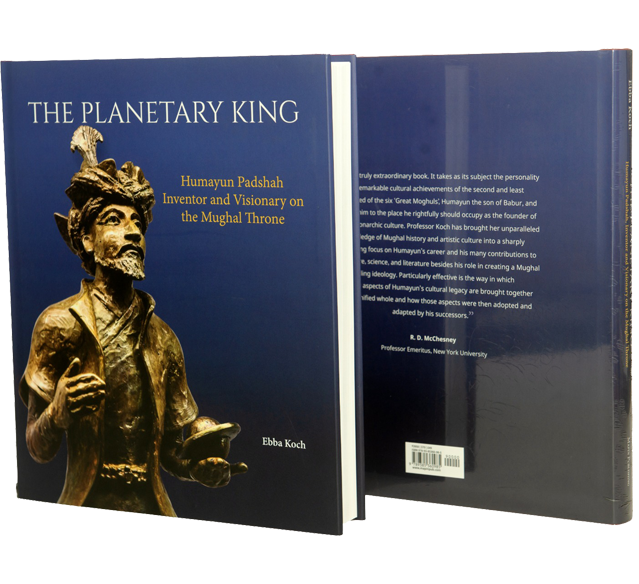
by Ebba Koch
Humayun, the son of Babur and the second Mughal ruler, reigned in Agra from 1530 to 1540 and then in Delhi from 1555 to 1556. Until now, his numerous achievements,including winning back the throne of Hindustan, have not been well recorded. Humayun neither wrote an autobiography nor had a historian to glorify him; the eccentric accounts of his historian Khwandamir elude general comprehension.

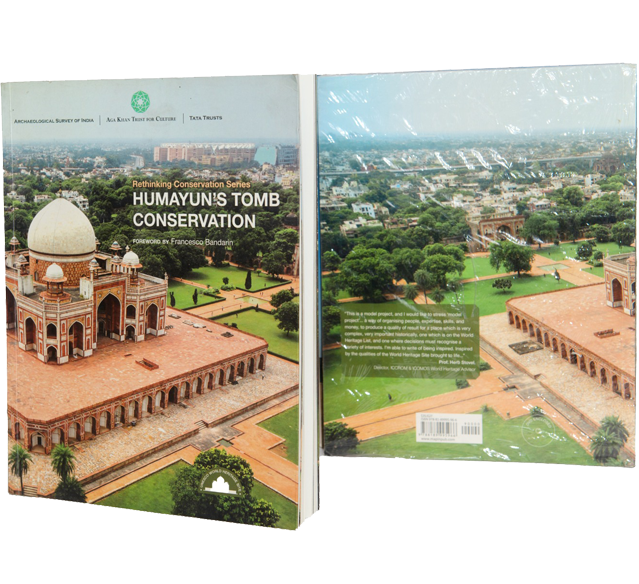
by Aga Khan Trust for Culture
Humayun's Tomb, a magnificent 16th century monument, recently declared a World Heritage Site, has been the focus of a concerted restoration effort in the past several years. This conservation effort, co-funded by the Tata Trusts from the onset, remains the only privately undertaken conservation effort at any of India's sites of national importance.
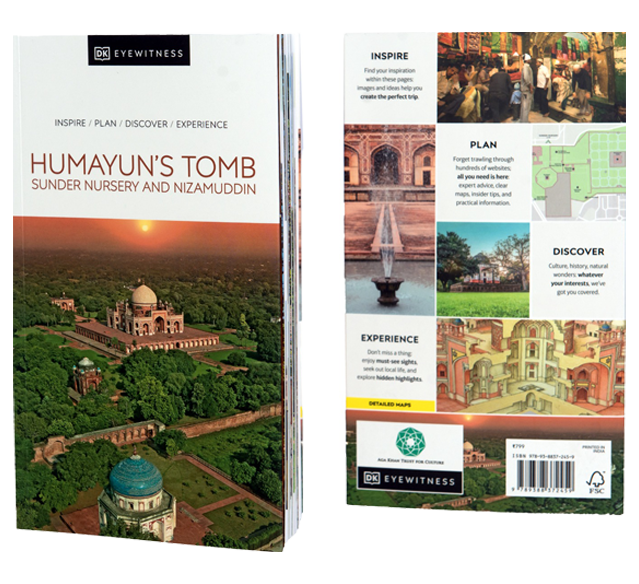
by DK and Aga Khan Trust for Culture
Take a walk through Sunder Nursery’s abundant biodiversity, marvel at the 13th century garden tombs or delve into the fascinating displays at the museum. DK Eyewitness Humayun’s Tomb, Sunder Nursery and Nizamuddin transports you to ancient times with its narrative of each sight’s historical significance. Alongside, it expertly blends informative insights into the scientific conservation and ecological preservation efforts taken to restore these monuments to their former glory with the aim to promote sustainable tourism. You can experience it all here, whether you love history, art, architecture, culture or nature.
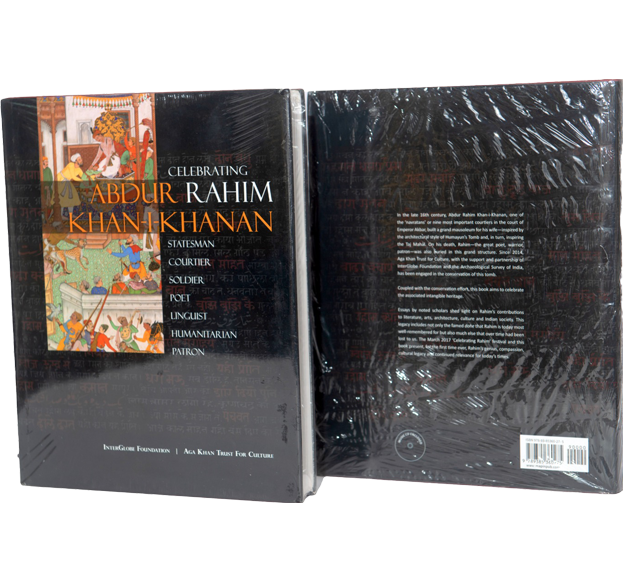
by Aga Khan Trust for Culture
Abdur Rahim Khan-i-Khanan (1556-1627), referred to in Mughal records as the 'noble of nobles', was one of the Nine Gems of Emperor Akbar's court. Hailed upon his birth as a "pearl from the river of good fortune", Rahim Khan-i-Khanan distinguished himself as an unmatched soldier, statesman, patron and poet in the courts of three generations of Mughal emperors.
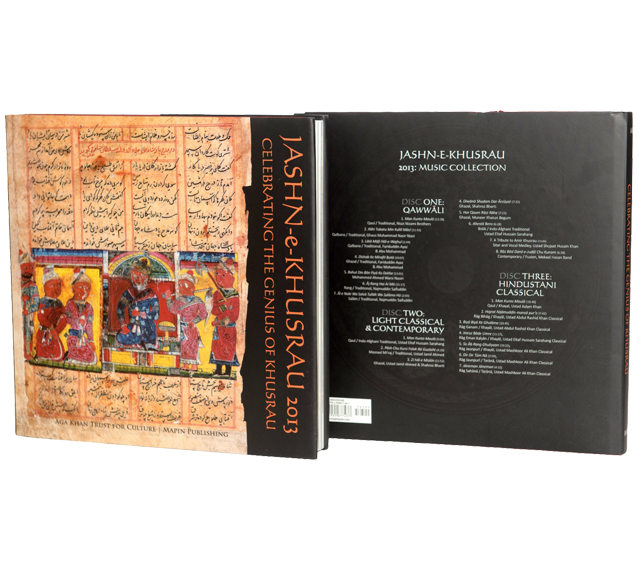
by Aga Khan Trust for Culture
Amir Khusrau is one of the greatest poets of the Persianate region comprising of South and Central Asia, Iran, and Asia Minor. He lived in Delhi (13th/14th century), in the period which saw an amazing influx of scholars, poets, artisans, Sufis, travellers, and merchants from Persianate Central Asia - the area and civilization ravaged by Chengiz Khan, the Mongol - to South Asia. He saw the merging of two great civilizations - Hindu and Islamic - and he wove them beautifully in his literary works, language, music, and local traditions. Jashn-e-Khusrau 2013: Celebrating the Genius of Khusrau celebrates the contributions of Khusrau in the making of the composite South Asian culture that has come to be known as Hindustani.